
THE SMART WAY TO LIGHT YOUR HOME, DAY AND NIGHT
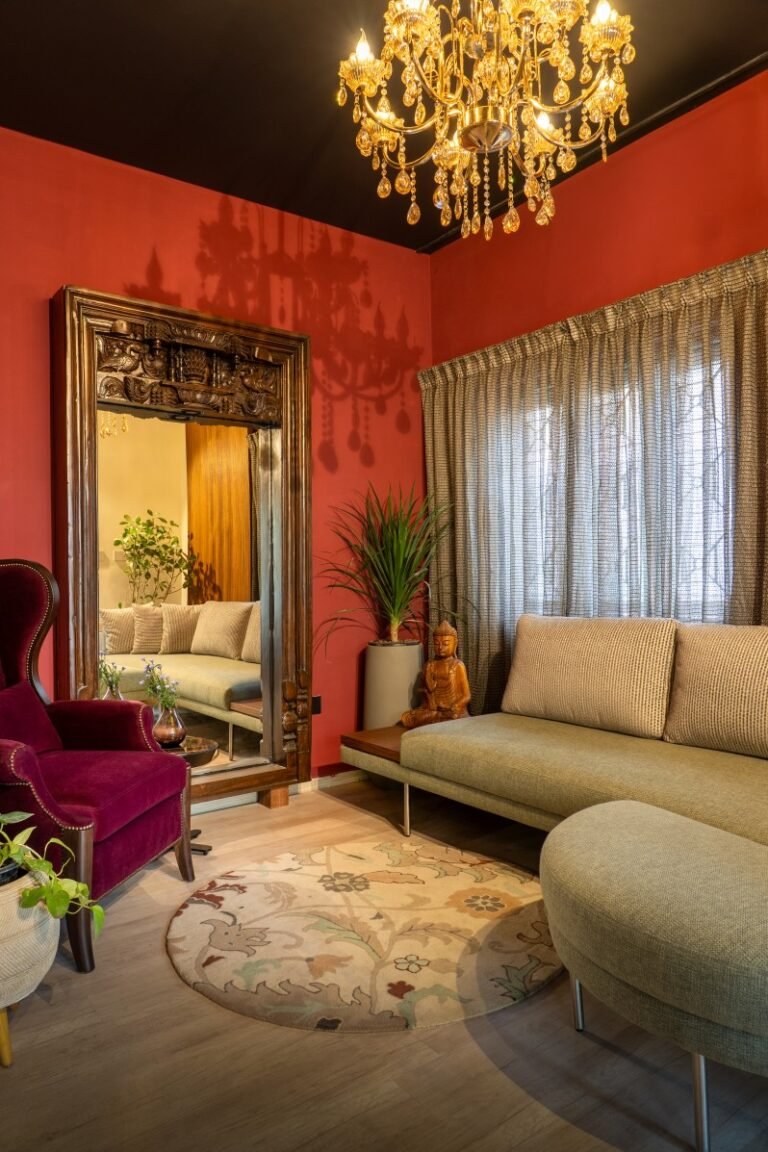
Most people spend weeks choosing sofas, paint colours and curtains. Lighting usually comes last. But lighting decides how a room feels. The same room can look cosy, dull, or harsh, just by changing the lights.
Start with daylight
Free light is the best light, so use it well.
- Keep windows clear: Heavy curtains and furniture blocking the window waste your best light source.
- Try sheer curtains: They let sunlight in while keeping the room private and the glare soft.
- Use mirrors: A mirror placed across from a window bounces light deeper into the room.
- Pick light colours for walls: Whites, creams and soft pastels reflect daylight, while dark walls swallow it.
If a room still feels gloomy in the daytime, that’s a sign to look at your electric lighting.
Use three layers of light
This is the one idea worth remembering. A well-lit room uses three kinds of light together.
1. Ambient light
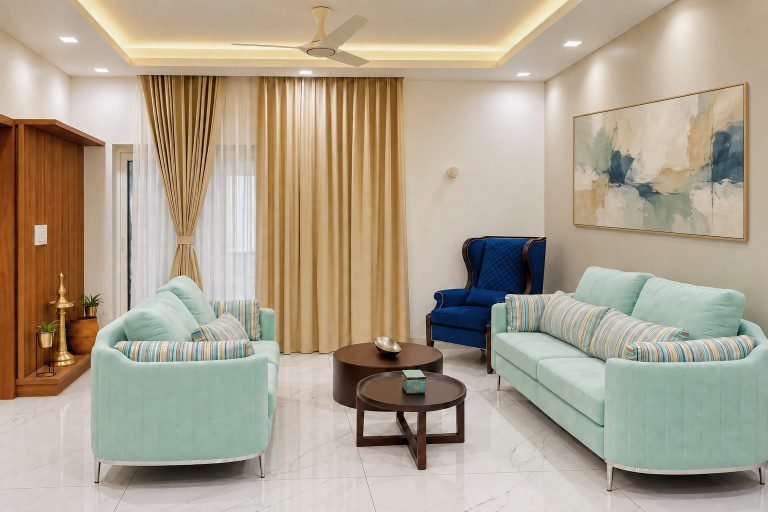
This is the main light that fills the room, like ceiling lights or panel lights. It is uniformly filled with the room. Recessed LED panels & downlights, cove & LED strip lights, chandeliers & pendant fixtures, surface-mounted panels & battens, floor & table lamps.
2. Task lights
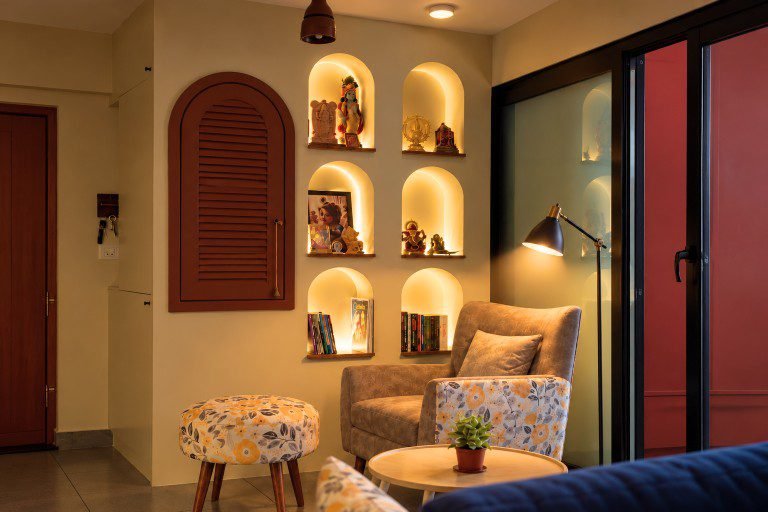
These are adjustable light fixtures for specific places: a reading lamp by the bed, lights under kitchen cabinets, and a desk lamp for work. It helps you do things without straining your eyes.
3. Accent lights
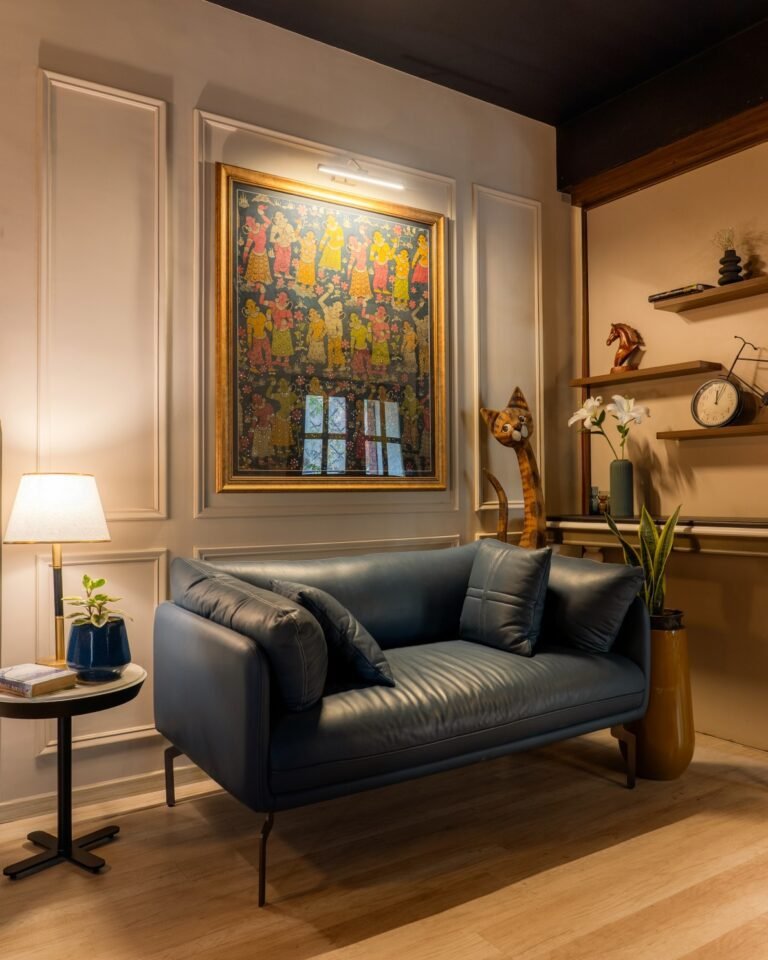
These are giving visual attention to focal points. Style a room by highlighting specific features like artwork, textured walls, or cosy corners, a strip light behind the TV, or a small lamp on a shelf. It adds depth and mood. Common examples of accent lights are picture lights, Spotlights and directional track lights, Wall sconces , In-cabinet and shelf lighting , Uplights and toe-kick lighting , TV backlighting
Most homes only have the first layer, which is why they feel flat. Adding just one more layer makes a big difference.
Choose the right warmth
Bulbs come in different colours, measured in Kelvin (K). You’ll see this number on the box.
- 2700K to 3000K (warm white): Yellowish and cosy. Good for bedrooms, living rooms and dining areas.
- 3500K to 4000K (neutral white): This sits right in the middle, balanced and clear. Good fit for kitchens or hallways where you just need to see well.
- 5000K and above (cool white): Bluish and bright. Best for workspaces, garages or places where you need sharp visibility.
A common mistake is putting cool white bulbs everywhere. It can make a home feel like an office. When in doubt, go warm.
Think room by room
Living Room Lighting: Flexible and Warm
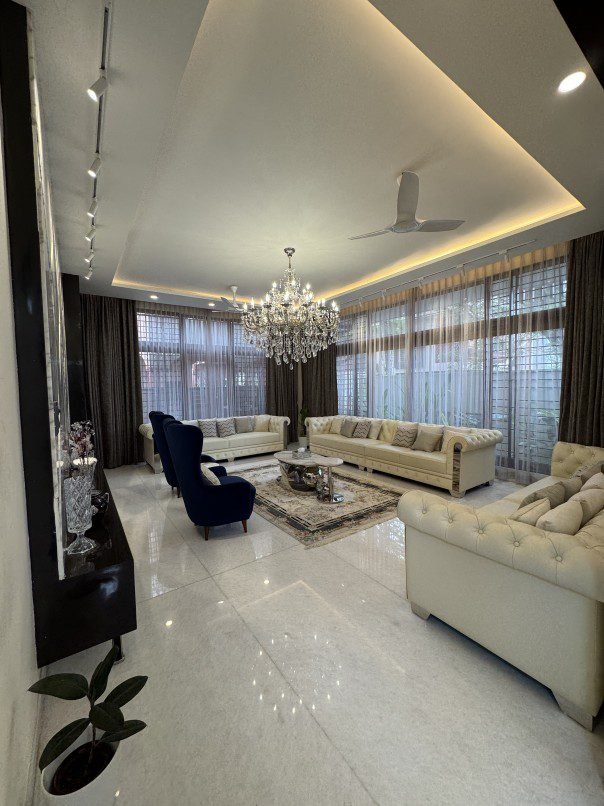
The living room is usually used for relaxing, socialising and entertaining guests. It may be a place for conversation, a quiet reading corner or a space where the family gathers after work.
That makes flexibility particularly important.
A combination of recessed ceiling lights, concealed lighting and decorative fixtures can create different levels of illumination. A floor lamp or table lamp near your seating area adds a warm, soft glow, while accent lights can draw the eye to a piece of art or a furniture piece you really want to show off.
If your living room has an interesting ceiling shape or architectural detail, indirect lighting is worth trying. Instead of the light source itself catching your eye, you notice the glow it creates across the wall or ceiling instead.
The result is often more subtle and more comfortable than a room filled with visible bright fixtures.
Kitchen Lighting Needs to Work Harder
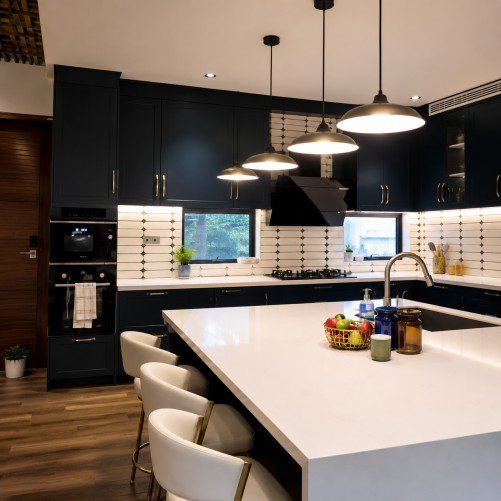
The kitchen isn’t like other rooms. It’s where you’re chopping, cooking and cleaning, so the lighting has to actually help you get things done.
Start with your work areas. The counters, especially where you prep food, need good, even light. Under-cabinet lighting is great for this since it lights up the countertop directly and gets rid of annoying shadows from your own body or the cabinets above. If you have an island, a pendant light above it does double duty: it lights up the space and looks good doing it.
One thing to watch out for: don’t let your countertop be bright while the rest of the kitchen sits in the dark. That kind of contrast is hard on the eyes and makes the room feel disjointed.
If your kitchen flows into the dining or living area, think of the lighting as one connected look rather than separate zones. The fixtures don’t all need to match exactly, but they should feel like they belong together, with similar tones, similar finishes, and similar warmth of light.
Make the Bedroom Feel Softer
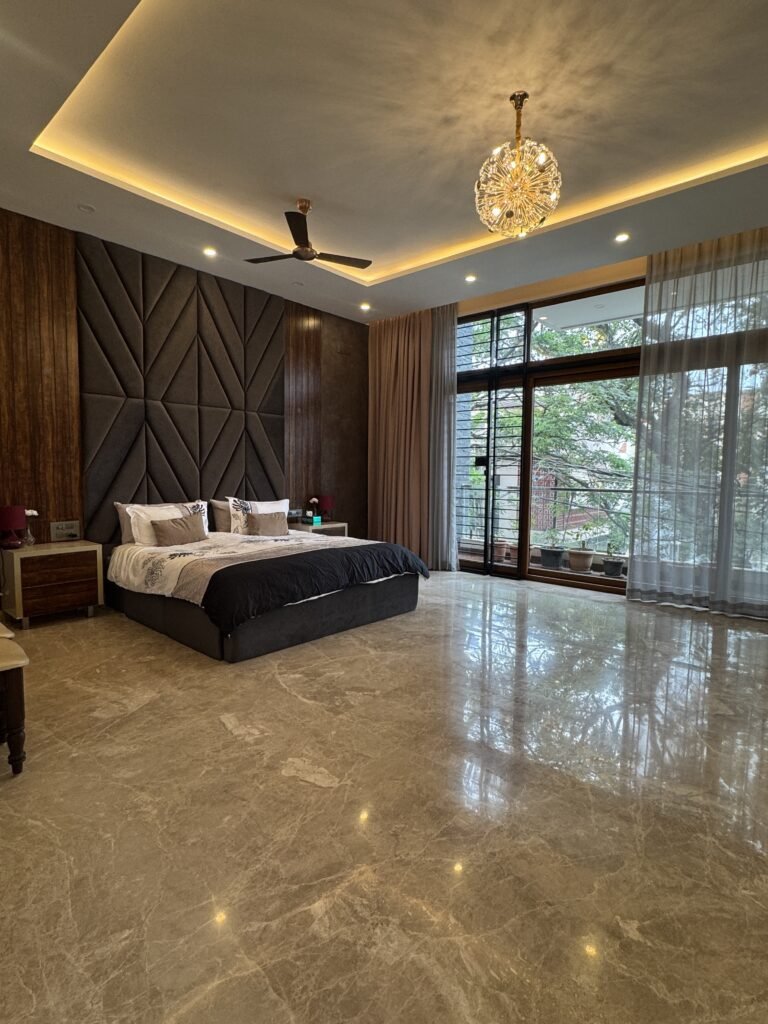
Bedrooms benefit from a quieter approach to lighting.
Instead of relying on a single bright ceiling fixture, try mixing a few softer sources instead: a bedside lamp, a wall light for reading, some hidden cove lighting, or fixtures on a dimmer. Together, they create a much calmer feel than one bright light overhead.
Bedside lighting matters the most here. A wall light or small pendant placed near the bed gives you enough light to read comfortably, without lighting up the whole room.
Wardrobe interiors can also benefit from integrated lighting. Small details such as these make a bedroom more convenient without making the lighting feel excessive.
The goal is not to make the bedroom as bright as possible. It is to create the right atmosphere for winding down.
Dining Areas Need a Sense of Intimacy
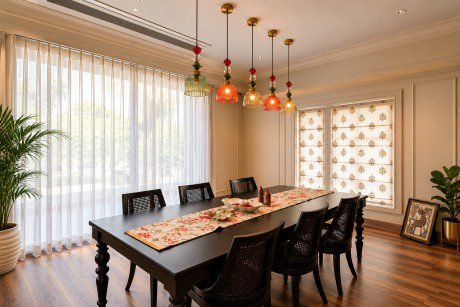
The dining table is usually the centre of attention in a dining space, so pendant lights above it just make sense.
One pendant, or a small cluster of them, hung right above the table does two things at once: it lights up your meal properly and gives the space a clear focal point.
Height makes a bigger difference than people expect. Hang it too high, and it loses that cosy, anchored feel. Hang it too low, and you’ll end up staring at a lampshade instead of the person across the table.
For evenings when you want a warmer, more intimate feel, pair the pendant with some soft ambient light around the rest of the room. That way, the table stays the star of the show, but the rest of the space doesn’t fall into darkness.
Bathrooms Need More Than Just a Ceiling Light
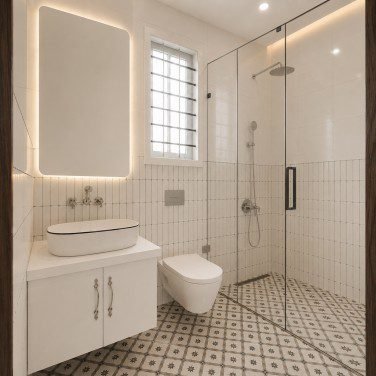
Bathroom lighting is the one thing people usually forget about until they’re standing in front of the mirror, squinting.
A ceiling light alone lights up the room fine, but it’s not great for your face. It tends to throw shadows under your eyes and chin, which makes shaving, applying makeup, or just getting ready a lot harder than it should be.
The fix is simple: add lights on either side of the mirror or wall-mounted fixtures at face height. This spreads the light evenly and gets rid of those shadows.
For a nicer touch, you can add soft lighting under the vanity or along the edges of the cabinetry. It won’t do much for visibility, but it gives the bathroom a calmer, more put-together look.
In short, a good bathroom needs light that’s genuinely useful, not just light that fills the room.
Study or Work Corner
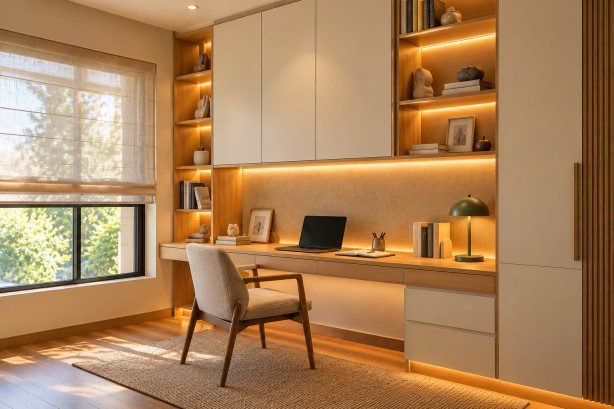
A work corner needs light that helps you focus, not light that feels like you’ve walked into an office.
During the day, natural light does most of the work. If you can, place your desk near a window. You’ll notice the difference immediately; it feels brighter and easier on the eyes than any bulb.
Once it gets dark, you’ll need two things together: a focused light for your desk and some soft light around the rest of the room. A wall-mounted reading light or an adjustable table lamp works well for this, since you can point it exactly where you’re working. Add a bit of indirect lighting nearby so the rest of the room doesn’t fade into darkness while your desk is lit up.
If you have a built-in study area with shelves or cabinets, tucking small lights underneath them is a nice touch. It keeps your desk clutter-free and quietly shows off the woodwork at the same time.
At the end of the day, you just need enough light to work comfortably, nothing more.
Use Light to Highlight Materials and Furniture
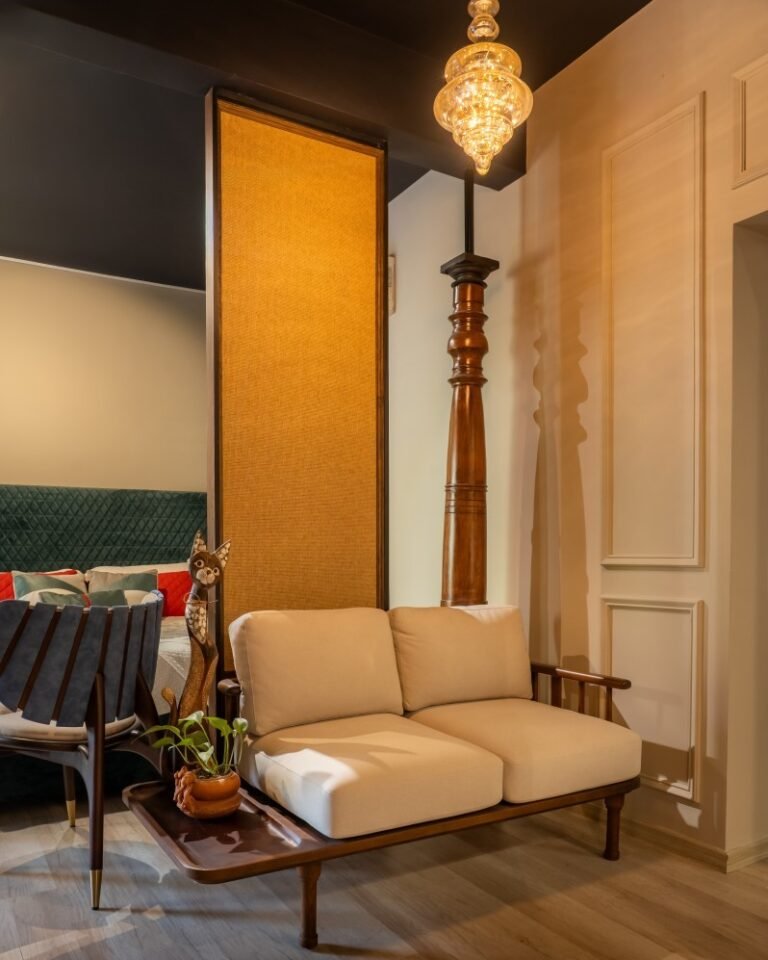
This is where lighting gets genuinely fun, when it starts interacting with the materials around it.
Wood looks its best under warm light; it almost glows. Stone is a bit different; angle a light across its surface (rather than straight on), and the texture suddenly comes alive. Fluted surfaces are great for this too, since the grooves catch shadows that shift as the light changes. Even metallic finishes, which can look flat under flat light, pick up little highlights when the light hits them just right.
The same idea works for furniture. A sculptural chair, a handcrafted console, a cabinet with interesting texture – none of these need to be lit up dramatically. Often, one well-placed accent light is all it takes to bring out its shape.
This is really the point where lighting stops being just a technical detail and starts becoming part of the design itself.
Choose Colour Temperature Carefully
The colour of your light changes the entire mood of a room, more than most people realise.
The cooler light feels crisp and alert, almost like daylight. Warmer light feels softer and more relaxed, the kind of glow that makes you want to sit back and unwind. Neither is “better”, it just depends on what the room is for.
In most homes, warmer tones work well in bedrooms, living rooms and dining areas, basically anywhere you want to relax. Neutral or slightly cooler light makes more sense in kitchens, bathrooms and workspaces, where you actually need to see things clearly.
The one thing to really watch out for is consistency. If you walk from a warmly lit living room into a hallway that suddenly feels cold and blue, it’s jarring, even if you can’t immediately explain why. That’s why it’s worth thinking about lighting across your whole home rather than picking it room by room without a plan.
Design for the Transition From Day to Night
One of the smartest things you can do with home lighting is think about how your house changes over the course of a day, because it does, even if you’ve never really noticed it.
During the day, let natural light do the heavy lifting. As the sun starts to go down, that’s your cue to bring in artificial light, gradually, not all at once.
And that doesn’t mean flipping on every switch in the house.
Different lights earn their place at different times. Ambient lighting covers the basics, while accent and decorative lights are what actually set the mood once evening rolls around. A living room is a good example: bright and functional while the family’s moving around and busy, then softer and dimmer once everyone settles in for the night.
Dimmers and smart controls make this whole shift effortless. You’re not rewiring anything or adding more switches, just adjusting what’s already there.
A good lighting plan should let your home ease from day into night on its own, without you having to think too hard about it.
Common Lighting Mistakes to Avoid
Even a beautifully designed home can fall flat because of a few lighting mistakes that are easy to miss.
Relying on one ceiling light: It’s the most common one. A single light in the middle of the ceiling leaves corners dim and makes the whole room feel flat, no matter how nice the furniture is.
Going overboard with spotlights: Recessed spotlights are useful, but too many of them scattered across the ceiling start to look messy, and you end up with random bright patches instead of even light.
Not thinking about shadows: Where a light sits matters just as much as how bright it is. A badly placed light can throw shadows exactly where you don’t want them, over a countertop, across a mirror, or onto a reading chair.
Mixing warm and cool light in the same space: Walk from a warm room into a blue-white one and it feels off, even if you can’t say exactly why. Keeping tones consistent avoids that.
Picking a light fixture just because it looks nice: A gorgeous pendant is pointless if it doesn’t actually light the area properly. Looks and function need to go together.
Skipping the controls: Having different lights on one switch means you lose all flexibility. Separate controls (or dimmers) let you actually use the layers you’ve designed.
Make it smart, not complicated.
“Smart” doesn’t have to mean expensive gadgets. Even small changes help.
- Dimmers let you change the mood in seconds. Bright for cleaning and cooking, soft for the evening.
- Timers or smart bulbs can switch lights on and off automatically, which is handy when you’re travelling.
- LED bulbs don’t use much power, and they last for years. You’ll notice it on your electricity bill before long.
- Separate switches for different lights give you more control than one switch for everything.
Day to night: adjust as the hours change.
Your lighting should change with the day, just like you do.
- Morning: First thing, open the curtains. Let the sun do the work instead of flipping a switch.
- Afternoon: Daylight should cover most of what you need. Only switch on a lamp for something specific, like reading or working at a desk.
- Evening: Start swapping the harsh, bright lights for warmer, softer ones. It signals to everyone that the day’s winding down.
- Night: Keep things dim. Bright lights late at night can genuinely mess with your sleep, so low and gentle is the way to go.
A few quick mistakes to avoid
- Using one light in the centre of the room and nothing else
- Mixing bulbs of very different colours in the same room
- Ignoring corners, which makes a room look smaller
- Buying fancy fixtures without checking how much light they actually give
Bringing It All Together
Good lighting isn’t about spending more. It’s about planning a little better: use daylight well, layer your lights, pick the right warmth, and give yourself control. Do that, and your home will feel more comfortable at every hour of the day.
We’re The Banyan Studio, an architecture and interior design firm in Bangalore. For us, lighting isn’t something added at the end; it’s part of the plan from day one. The result is rooms that feel comfortable and work the way you need them to. Got a new home or a makeover in mind? Let’s connect.