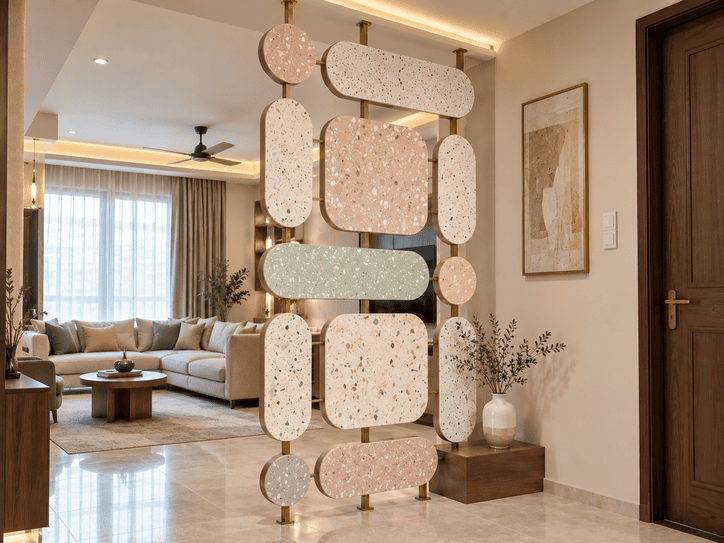
Hall Partition Ideas for Your Home
25 Ways to Divide a Hall Without Shutting It Down
Almost every home we walk in has the same brief buried somewhere in the conversation. The client wants an open, breathable hall, but they also want the puja unit tucked away from the front door, or a soft boundary between where people sit and where they eat, or simply a way to stop the entryway clutter from being the first thing a guest sees. Nobody wants a wall. Everybody wants a boundary. That tension is exactly what a good partition solves. It's not there to close a room off, it's there to give a hall structure, so your eye knows where one activity ends and another begins, even when the space technically stays open. At The Banyan Studio, partitions come up in nearly every residential project we take. Below is a running list of the ideas from featherlight fabric screens to full architectural statements.
1. Privacy Glass Partition
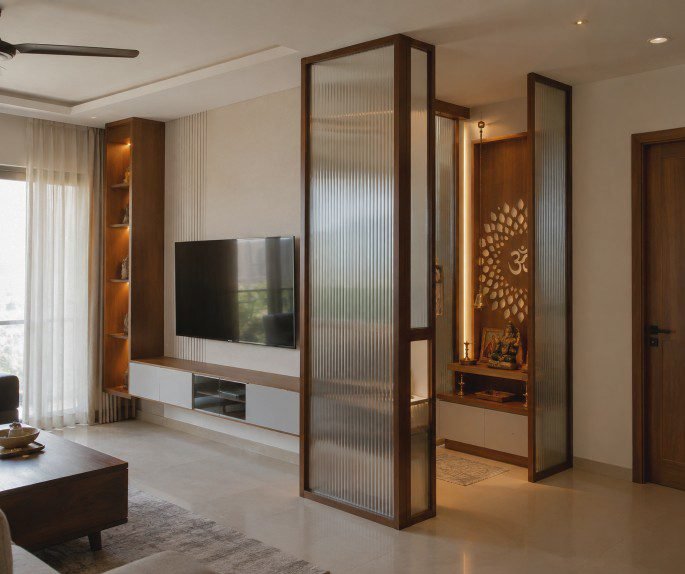
A plain clear-glass divider, framed in wood/aluminium/steel, focused on openness and budget-friendliness rather than privacy control. This suits halls that double up as something else during the day — a home office corner, a spot for online classes, or an area near the puja room that needs occasional privacy. It costs more upfront than most options on this list, but it removes the need for curtains, blinds, or a permanent solid wall, and the glass stays completely clear the rest of the time.
2. Wooden Panel Partition
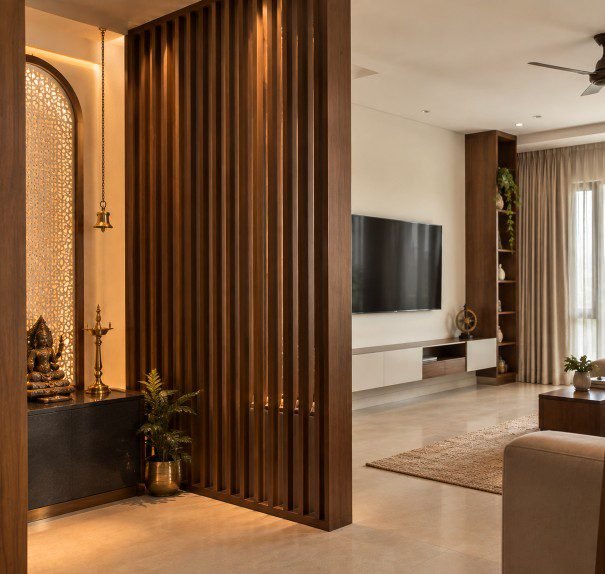
A wooden panel divider is the option for most homes because it never really goes out of place. Depending on how it's detailed, it can sit as a nearly solid screen or leave enough of a gap for air and light to pass through. The orientation of the panels changes the room more than people expect — vertical panelling tends to lift a hall with a lower ceiling, while horizontal panelling stretches a narrow one. We tend to steer clients toward a real veneer, like teak or sheesham, over laminate here, mainly because veneer wears in gracefully instead of just wearing out.
3. Glass Brick Partition
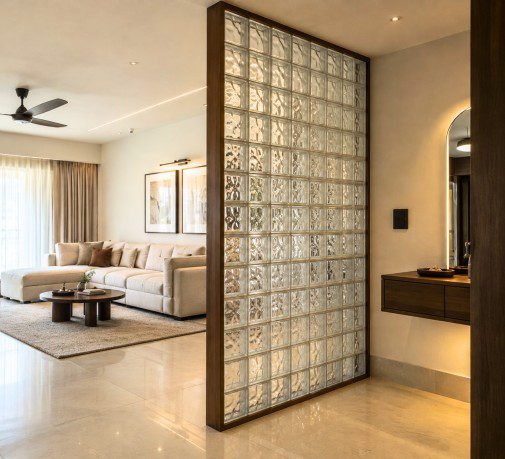
In glass brick partition, the bubbled, patterned surfaces have given way to smoother, ribbed, or lightly tinted options that scatter light through the partition while keeping the other side genuinely private. It's a strong choice anywhere you want the partition to hold some visual weight — beside a staircase or catching the last of the evening light from a balcony.
4. Fabric & Stainless Steel Mix Partition
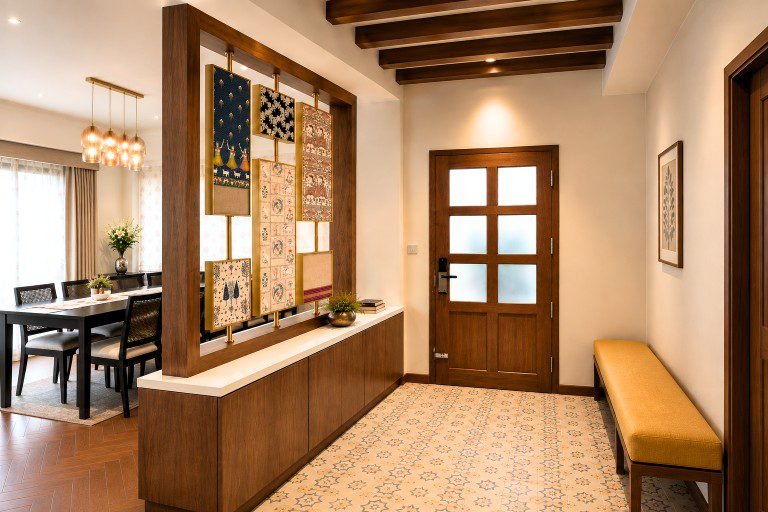
Pairing fabric with stainless steel — as rods, mesh, or a slim frame holding fabric panels. It softens sound a little more than steel alone would, while still keeping a distinctly modern edge. Maintenance is also easy.
5. Cane Partition
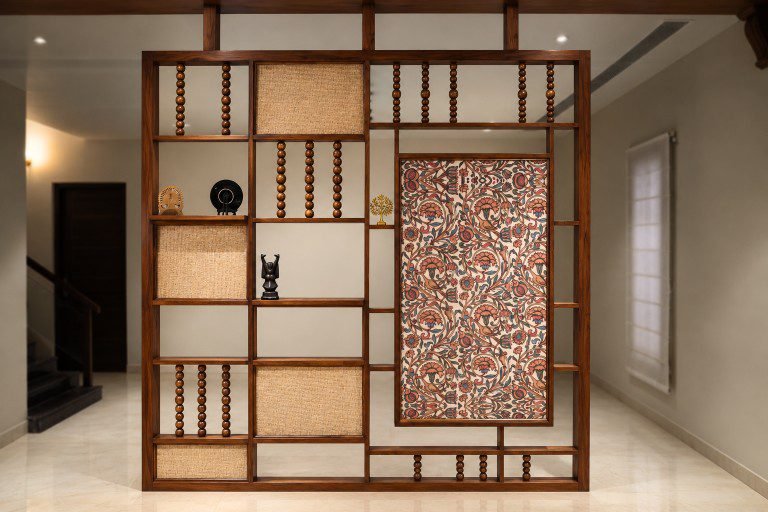
Handwoven cane, framed in wood or slim metal, lets both air and broken light move through it while still marking a clear edge in the room. Cane stays cooler and allows better airflow than a solid divider. A light protective coat against humidity keeps it looking good for years.
6. Fluted or Frosted Glass Partition
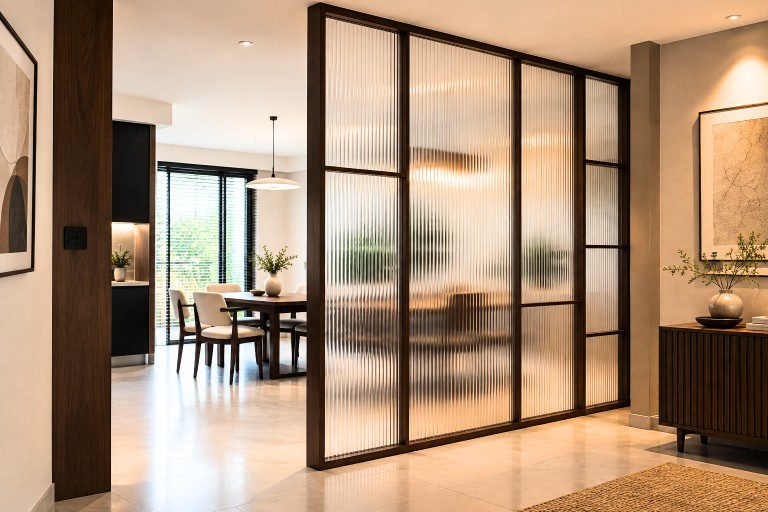
Fluted glass adds a slight shimmer and texture as you move past it, so it tends to feel more like a design element in its own right. Frosted glass is quieter and more even and a better fit when you want a modern partition.
7. Wooden Partition
Wood brings natural warmth, and it complements traditional and modern interiors. When we blend glass or metal into the wood, it enhances the overall look.
7.1 Foldable Wooden Living Room Partition
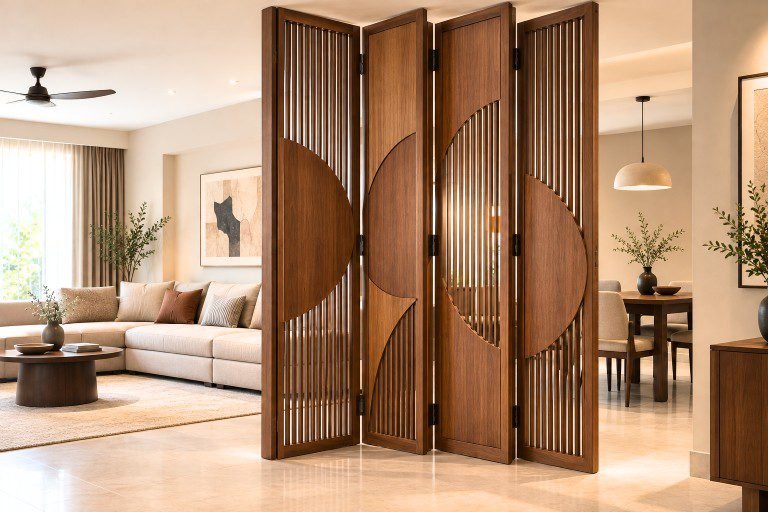
A hinged, foldable wooden partition can use in smaller apartments, where the hall often has to double as a living room and, occasionally, a guest sleeping area or study. It's an easy way to break up a hall into two zones without any fixed construction.
7.2 Wooden Frame Glass Partition
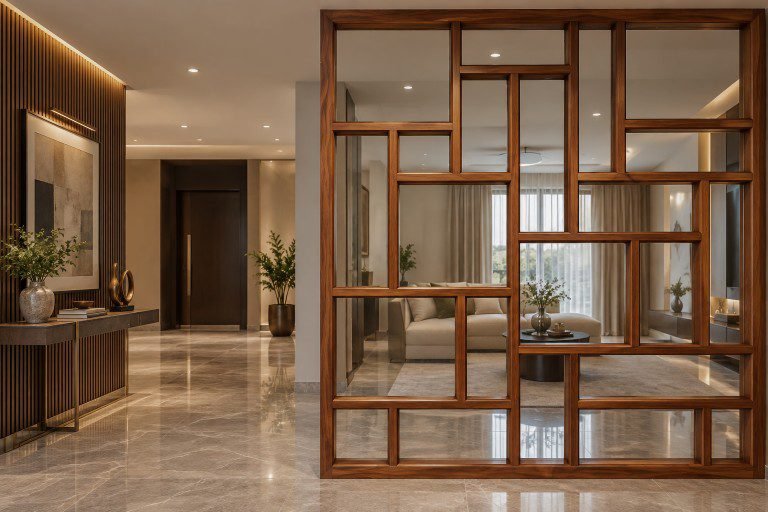
Wood and glass together give you the warmth of timber with the openness of glass, and this pairing gives some aesthetic look to your home.
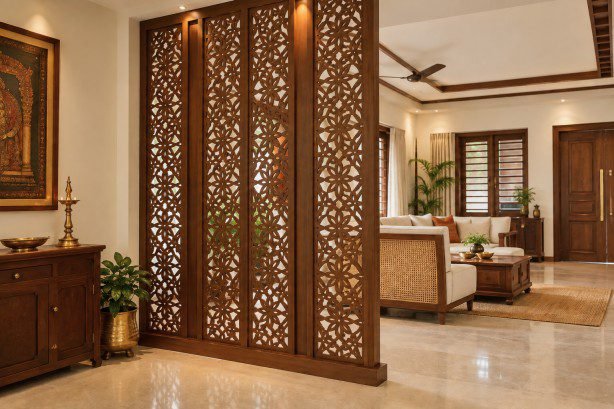
7.3 Wooden Frame Partition with CNC Cutting
CNC machining lets you cut intricate jaali-style patterns — florals, geometric repeats, or a custom motif. This CNC-cut wooden partition adds warmth and character and creates a stylish visual separation. This pattern allows light to pass through, keeping the space open and airy.
7.4 Wooden Door Partition (Lattice-Style)
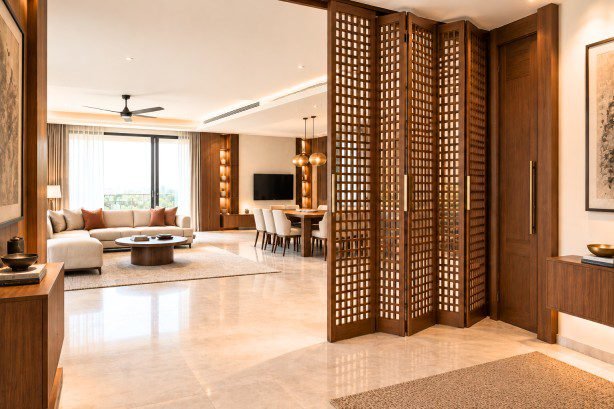
Traditional lattice work doors bring a heritage feel into a modern hall. This design creates privacy while allowing light and airflow to pass through.
8. Double-Sided Wall Partition Design with Fire & Luxe Appeal
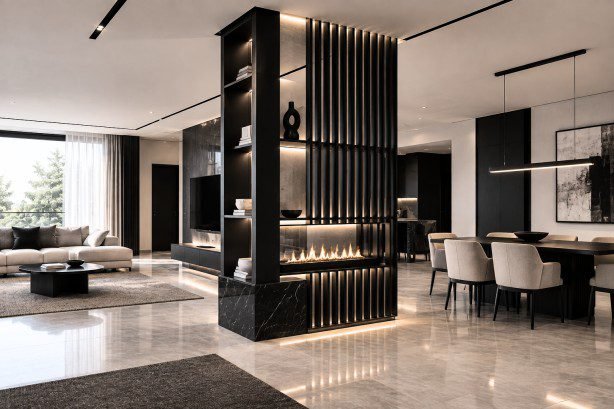
In a larger hall, a thick double-sided partition can carry a fireplace or entertainment unit on one face and a display wall or seating backdrop on the other. Add a linear electric fireplace, stone-effect cladding, and built-in shelving, and the partition stops being a divider and becomes the room's architectural centrepiece. This works best where there's enough volume to support a floor-to-ceiling element without the hall feeling boxed in — typically independent houses or larger apartments. It's one of the costlier ideas here, but it also does the most visual heavy lifting; once it's in, the rest of the room needs very little else.
9. Hall Divider Ideas with Built-in Storage
Storage is often a problem in all small homes. When designing partitions for compact spaces, incorporating built-in storage solves two problems at once. Why let a partition simply divide a room when it can add storage too? These smart designs combine separation and functionality without taking up unnecessary space. Here are three storage partition ideas that we frequently use in our projects.
9.1 Bookshelf Partition Design
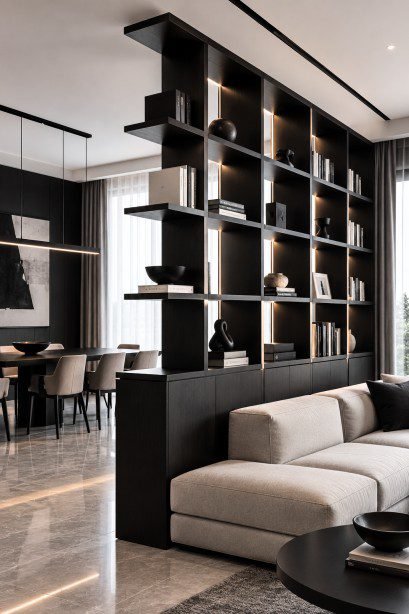
An open bookshelf standing between the living and dining areas will create a clear break in the room. It's an easy, natural way to display books and objects instead of tucking them away, and it keeps a hall feeling lived-in.
9.2 TV Unit Divider
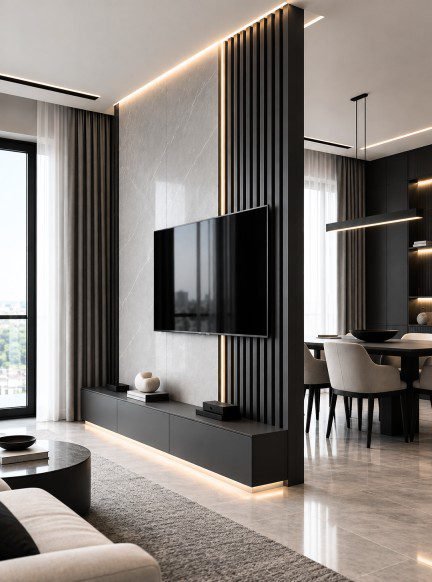
Folding the television unit into the partition wall is one of the most efficient moves for a compact hall. The TV faces one side, open shelving or a small study nook faces the other, and the whole structure replaces a wall without taking up the floor area a full partition would.
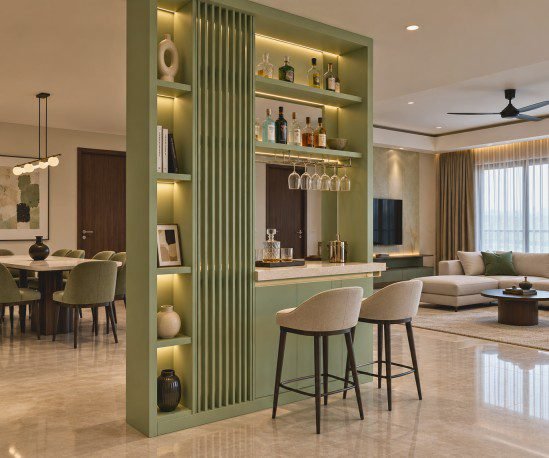
9.3 Bar Unit Divider
For some homes the partition built around a bar — wine storage, glass shelving, a bit of ambient lighting — turns a purely practical divider into something guests actually gather around. It works particularly well between the hall and an adjoining dining or balcony space.
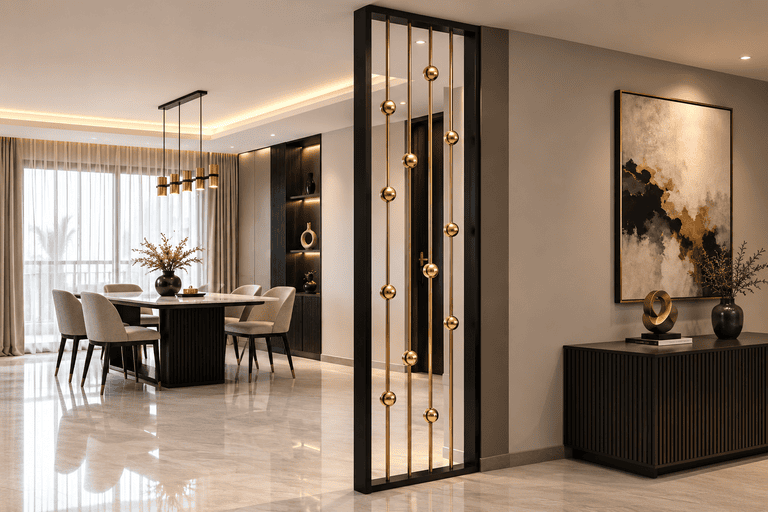
10. Metal & Gold Finish Ball Partition
This is one of the more sculptural options — slender metal rods strung with brass or gold-finished spheres, arranged in a tight grid or a looser cascading pattern. It acts more as a piece of art than a structural divider, with almost no visual weight of its own but a strong decorative presence. It sits comfortably in contemporary and art-deco-leaning homes, most often placed as a slim divider near the entrance rather than as a full room split.
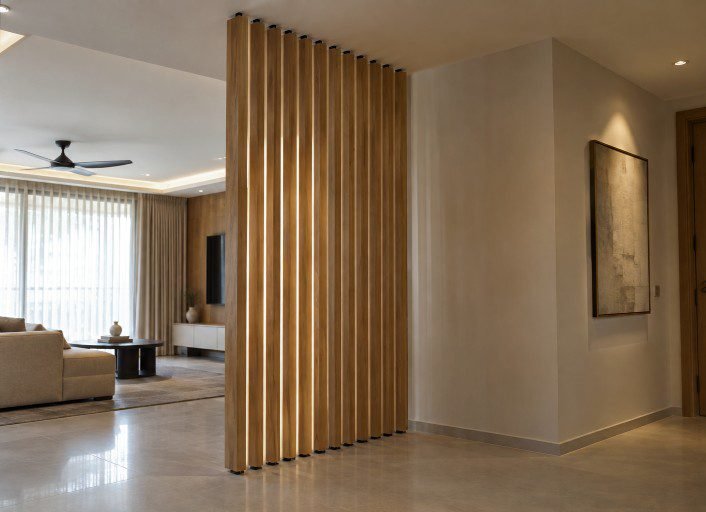
11. Wooden Slatted Divider
Evenly spaced vertical slats on a simple frame remain one of the most flexible partition designs. The gaps keep light and air moving through the hall, and the repetition of the slats gives the wall a strong, deliberate rhythm. Spacing changes the character entirely — tighter gaps read as more solid and private, wider gaps feel airier and more relaxed.
12. Plywood Partition
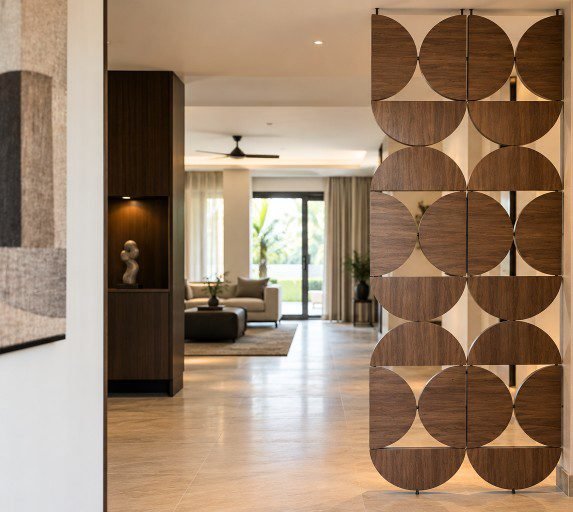
Plywood is the more budget alternative to solid wood panelling. With the right laminate, veneer, or paint, a plywood partition can look every bit as refined as timber while weighing less and costing considerably less too.
13. Bamboo Partition
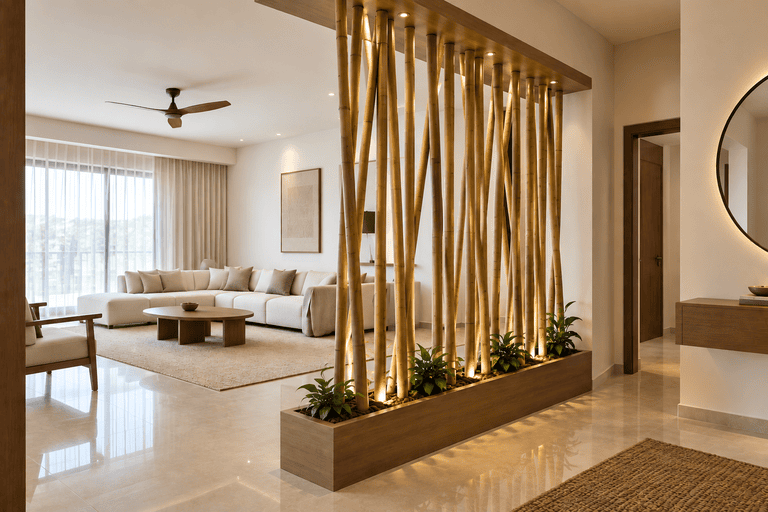
Bamboo brings a distinctly earthy, sustainable character into a hall, and it's seeing real demand again as homeowners lean toward natural, low-impact materials. Woven or vertically arranged bamboo panels sit especially well near a balcony-facing hall, particularly in homes with a tropical or minimal-natural design language. It's light, renewable, and works effortlessly, with terracotta accents and warm timber tones.
14. Mirror Partition
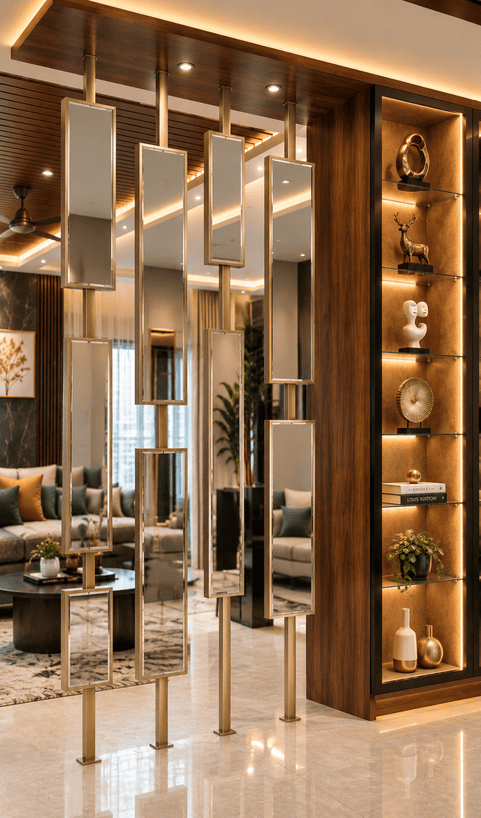
A mirrored partition makes the hall feel bigger than it actually is. By bouncing light and reflecting the far half of the room, it blurs the very boundary it's creating, which sounds contradictory but works remarkably well in long or narrow halls. An antiqued or smoked-mirror finish softens the effect for homeowners who find a full reflective wall a bit much; even a mirrored strip within a wood or metal frame can noticeably lift a room.
15. Plant Buffering / Green Buffering (Greenery Walls) Partition
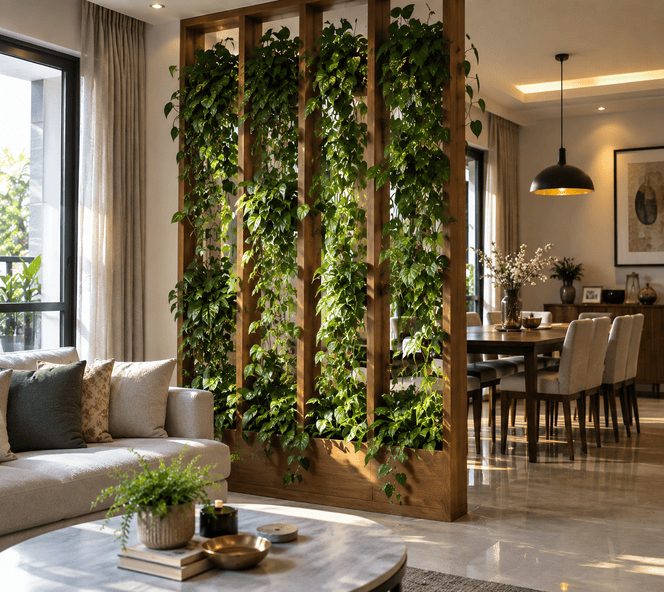
Not every partition needs to be built — some can simply be grown. A line of tall planters, a vertical garden panel, or a trellis with a climbing plant can mark a boundary in the hall while genuinely improving the air and mood of the space. This works best where there's decent natural light near the divider, and it's one of the few ideas on this list that actually improves with time as the greenery fills out.
16. Aluminium-Framed Dividers
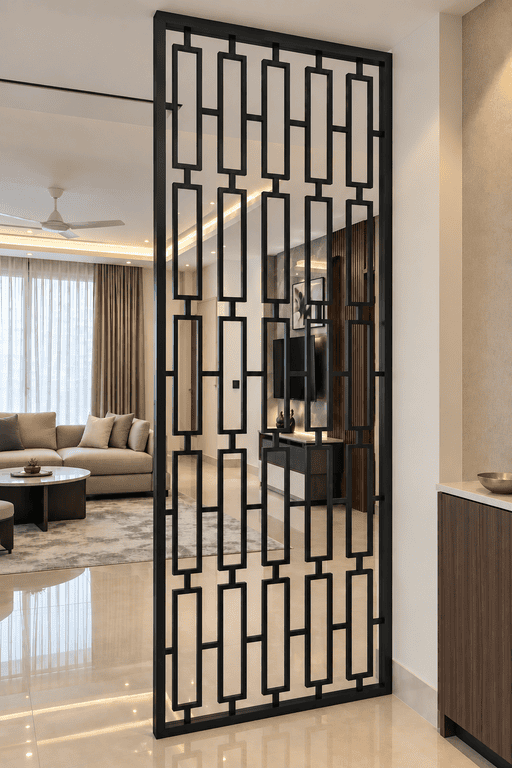
Slim aluminium frames — usually holding glass, fabric, or fluted panels — give a partition a clean, contemporary edge. Aluminium sections can run much thinner than wood, so the divider takes up very little visual character.
17. Glass & Steel Mix Partition
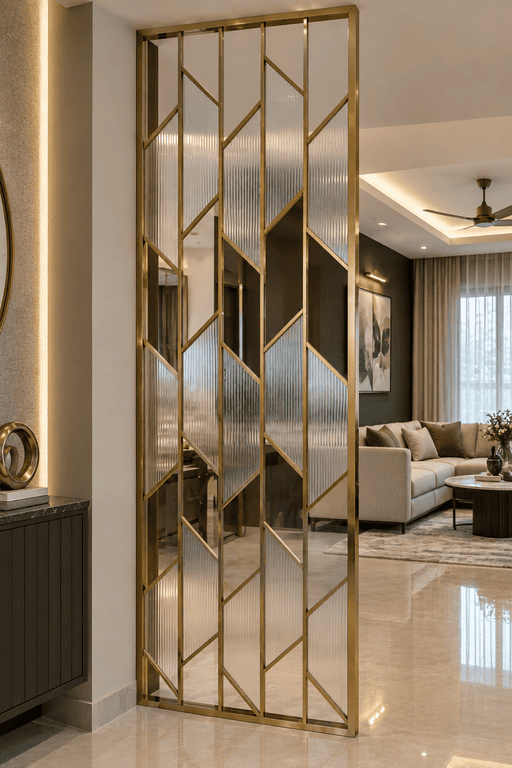
Glass panels held in a steel frame — matte black, bronze, or brushed steel. The steel grid can be kept fine, made bolder with thick black framing around large glass panes — it either reads as a deliberate architectural choice rather than a basic divider.
18. Suspended Rope, Rattan Partition
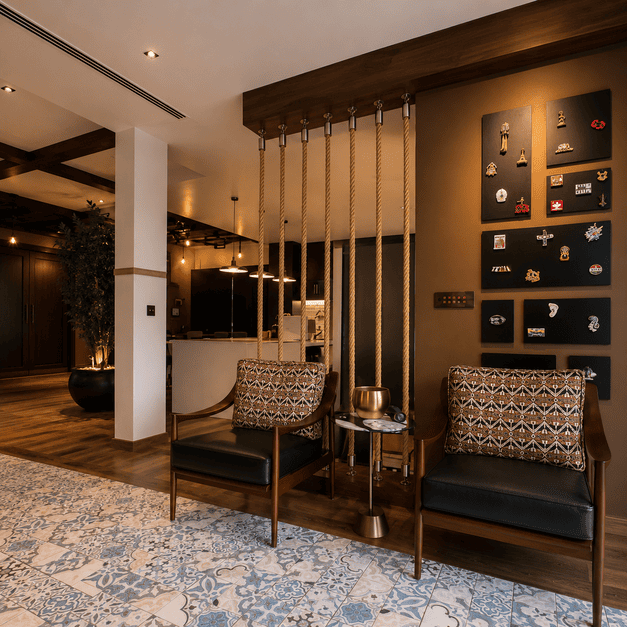
Suspended rope and rattan partition create style and aesthetics for the space. They shift slightly with the air in the room, throw interesting shadows, and never fully block the view. These partitions give a strong statement.
19. Gypsum Board Partition Designs
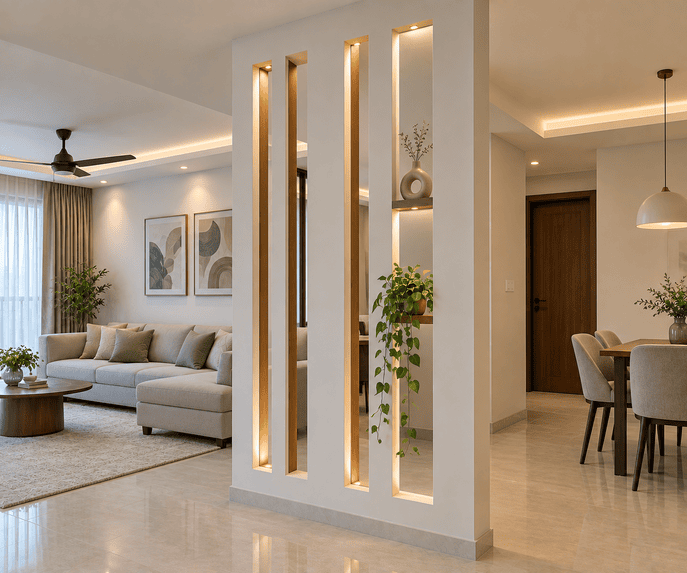
Gypsum board partitions stay popular because they are lightweight and don't add real load to the structure. The real strength here is how well gypsum hides wiring — cove lights, LED strips, and backlit niches all sit cleanly inside a gypsum partition, giving the hall a soft, layered glow.
20. Structural Column Partition
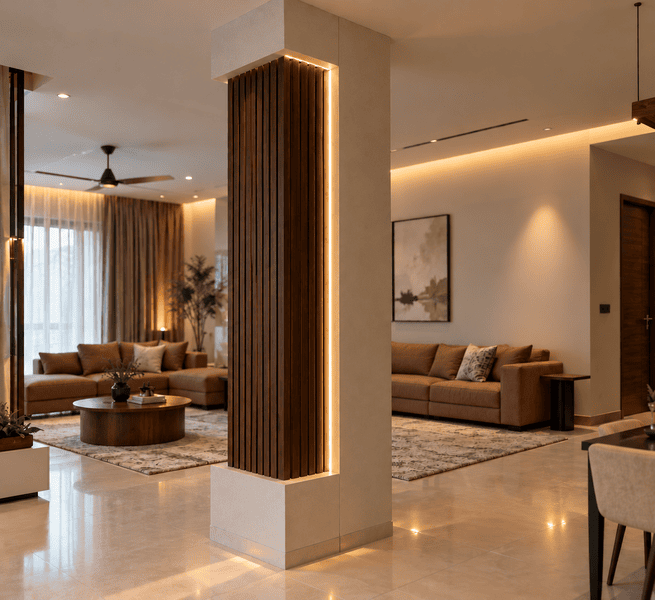
A single column, or a pair of them, positioned at the point where the living area meets the dining space can suggest a division without any panel at all. Faux columns in gypsum, wood, or PU can be added purely for effect. This suits homes that want separate zones without sacrificing any openness — the column signals the transition, but nothing actually interrupts the view or the light.
21. Terracotta Jaali Partitions
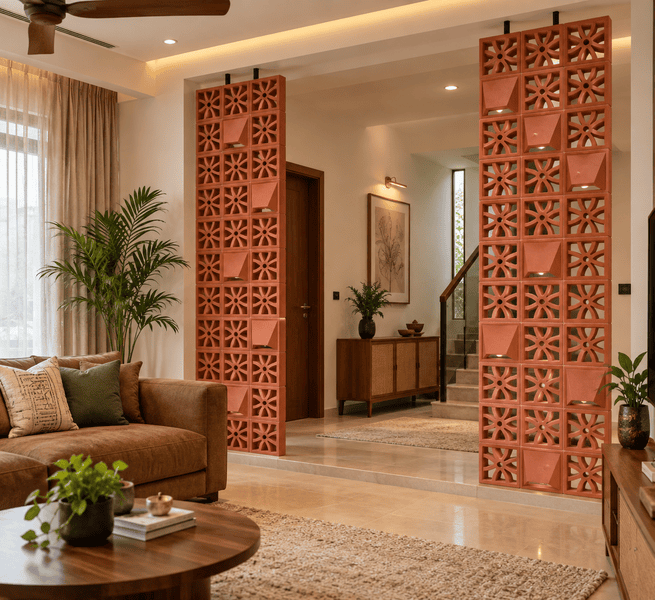
Terracotta jaali blocks — left in their natural earthy tone or painted over — carry a distinctly South Indian, courtyard-style character into a hall. The perforations let air move through freely.
22. Wallpaper Partition
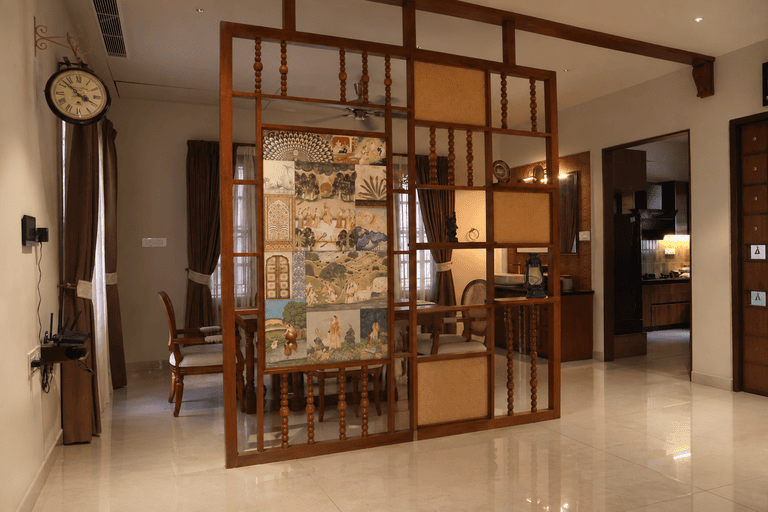
Sometimes the simplest fix does the most work. A plain partition wall — gypsum, plywood, or a basic stud-and-board structure — can be transformed just by choosing the right wallpaper for it. Botanical prints, textured grasscloth, bold geometrics, or even a mural-style design can turn a purely functional divider into the visual anchor of the hall.
23. Backlit / Onyx-Look Partitions
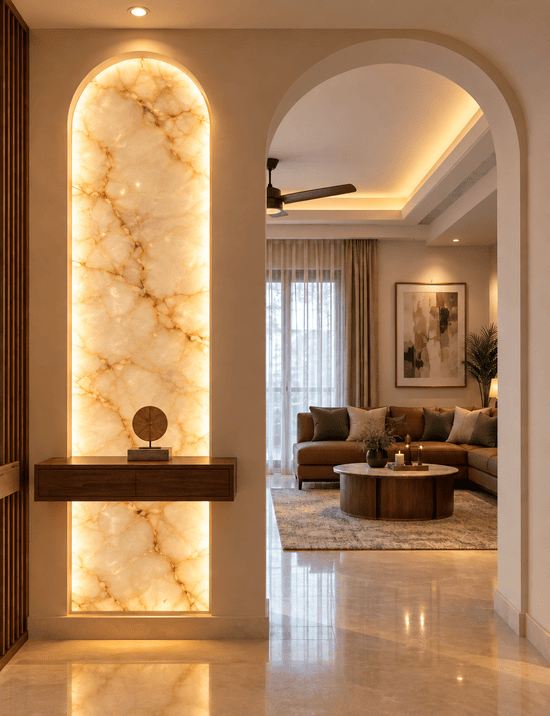
For a partition that genuinely stops people at the door, a backlit panel — real onyx stone or an onyx-effect acrylic sheet lit from behind — turns a simple divider. Real onyx is expensive, so usually point most residential budgets toward the acrylic- or PU-based onyx-look alternative instead — it delivers nearly the same effect at a fraction of the cost and weight, and it's far simpler to install.
24. Wooden pillar partitions
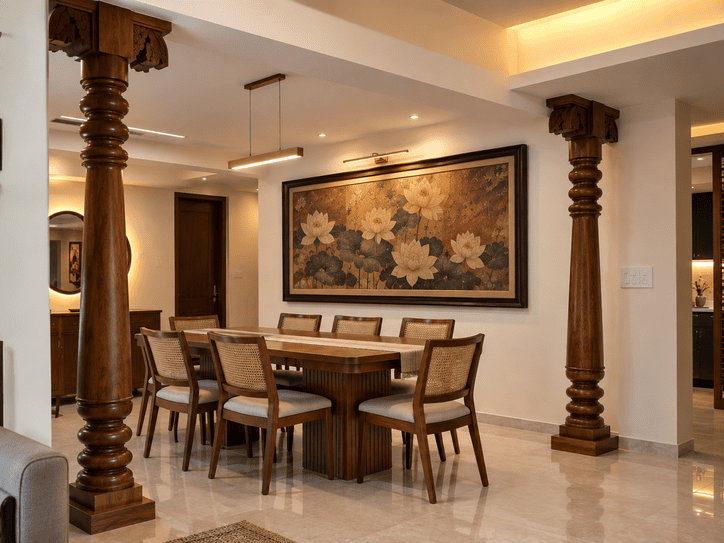
A row of wooden pillars — square, round, or fluted — placed between the hall and the next space works almost like the structural column idea. They mark a clear boundary without ever fully closing it off, and depending on the finish, they can lean rustic with a natural wood grain or more formal with a polished, dark stain. It's a good fit for homes that already use wood elsewhere in the hall, since the pillars tie straight into that language instead of feeling like a separate addition.
25. Tile Partitions